Why it was built
Keep the customer, and keep the fee Uber was taking.
A marketplace app will take a booking at 11 p.m. without anyone answering the phone. The cost is the cut, and the fact that the passenger's next trip still starts in Uber. This company wanted that self-serve convenience on a stack they controlled. Driver is the three pieces they asked for: an AI chat so passengers can book themselves, a phone app (a PWA they install from the browser) so the owner can manage the day, and Telegram so a new trip shows up as a native phone notification.
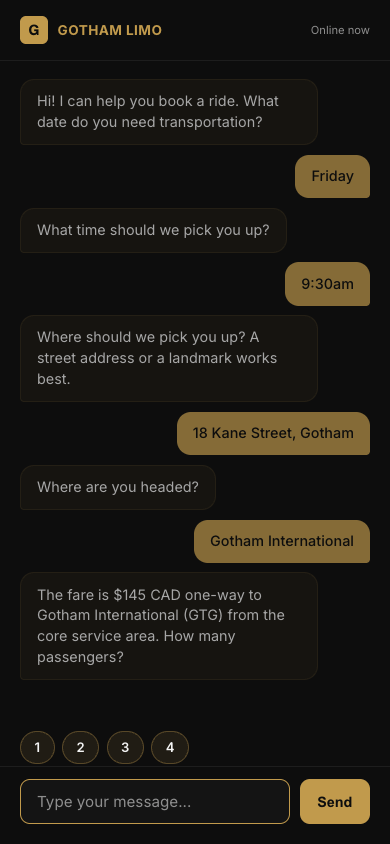
BookBooking chat
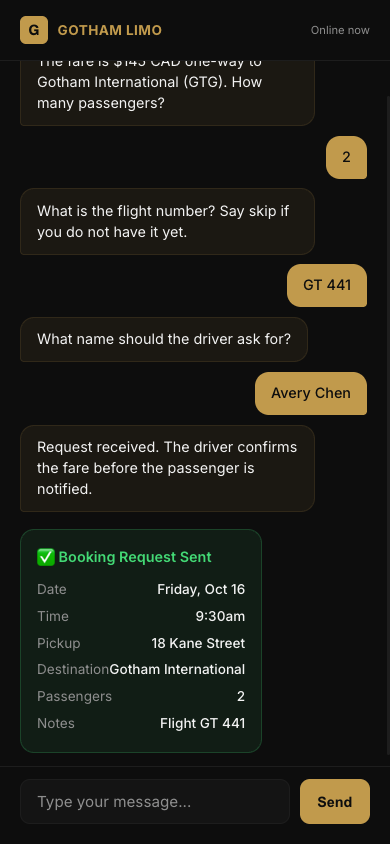
This replaces the Uber request. A passenger books on the company's own site, including after hours, without calling. The chat asks for a street or a landmark, checks hours and service area, and either quotes a published fare or says a driver will.
- A city name alone is not enough
- Quiet hours and service area
- Flight number on airport trips
Try an example →
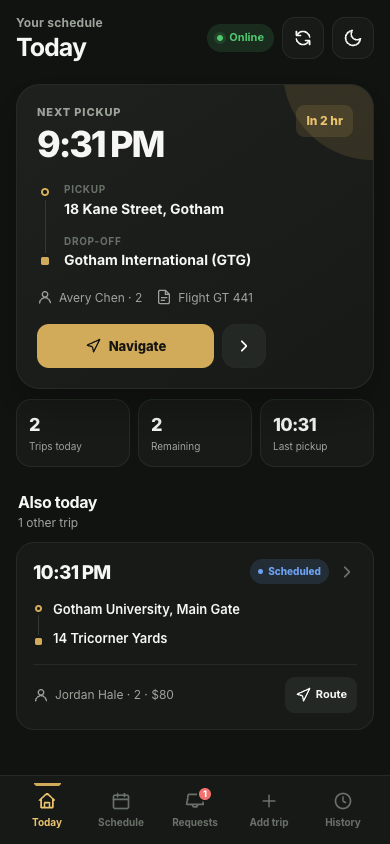
OpsDriver app
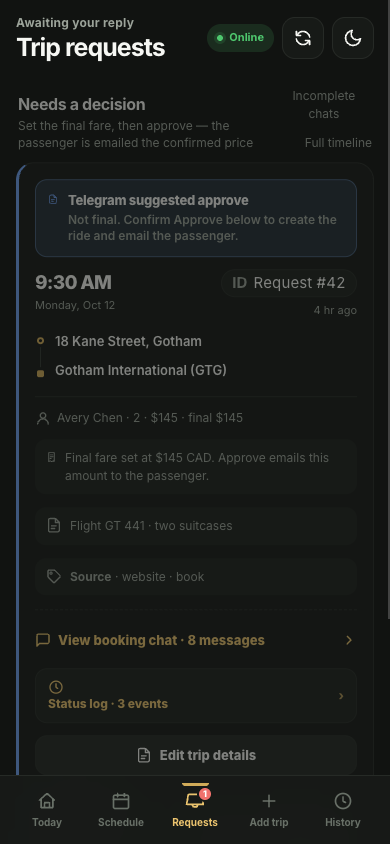
This replaces Uber's driver app. It is a PWA: a site the owner adds to the phone's home screen, with no app-store release. They set the fare, read the booking chat, confirm the ride, and write the invoice.
- Final fare before approve
- Telegram can suggest; the portal confirms
- Incomplete chats and funnel analytics
See the portal →
AlertsTelegram
This is the notification, not another login to remember. Telegram already reaches a phone the way a text does, which matters when someone is between trips. New requests, reminders, and ride status go only to drivers on the list.
- Today, upcoming, and pending
- Set price, then approve or decline
- Morning summary and pickup reminders
See Telegram →